
Anderson County Criminal History Checks
No one Anderson County search is a complete criminal history. Begin with the South Carolina Judicial Branch Public Index for filed Circuit and Magistrate matters. A participating municipal court may also send records there, but an absent city case still calls for direct contact with that municipal clerk. Search spelling variants when a surname changed or contains more than one part. Then compare the court, filing date, charge, status, and event history before deciding that a result belongs to the right person.
The practical sequence below separates a custody snapshot from a court outcome and a statewide record. It also gives Anderson County readers a fallback when an online tool does not show an older file or a newly created matter.
- Search the Anderson Trial Court Public Index by case number or party name, then narrow the court agency, case type, status, or date range when those controls appear.
- Open the case detail. Note the court, case number, filed charge, docket events, disposition, and sentence instead of relying on the result-list label.
- Check the county or City of Anderson detention roster if current custody is the issue. Booking data is not a conviction record.
- Ask the Clerk of Court, the correct summary court, or the municipal clerk for a missing, archived, or certified file.
- Use SLED CATCH for a paid South Carolina repository report, or the FBI fingerprint route when reviewing your own national Identity History Summary.
For court-level detail, the dedicated Anderson County court case lookup explains how filed charges and dispositions move through local courts.
Anderson County Records Cross Five Counters
Anderson County criminal records are spread across offices because each office creates a different part of the file. General Sessions records are at the active courthouse counter, 100 South Main Street. The Anderson County Sheriff's Office records and FOIA hub is at 305 Camson Road. County booking takes place at 1009 David Lee Coffee Place. Bond and central traffic matters use 2404 North Main Street, while the Public Defender works from 500 South McDuffie Street. Being sent to “the courthouse” may therefore put a requester at the wrong counter.
The Anderson County government directory shows how county departments are divided.

The directory is a routing tool, while the named custodian remains the best source for a specific Anderson County record.
Clerk of Court
100 S Main St, Anderson, SC 29624
864-260-4053
Weekdays, 8:30 a.m. to 5 p.m.
ACSO Records
305 Camson Rd, Anderson, SC 29625
864-260-4415
Weekdays, 8 a.m. to 4:30 p.m.
County Detention
1009 David Lee Coffee Place, Anderson, SC 29625
864-260-4201
Official Background Checks in South Carolina
The South Carolina Law Enforcement Division maintains the statewide Computerized Criminal History repository. Its public product, Citizens Access to Criminal Histories, is called SLED CATCH. A standard report costs $25 plus the checkout service charge. The name-based result covers South Carolina information supported by arrest fingerprints and later agency updates. It does not search current warrants, the sex offender registry, federal cases, or records from another state.
The official SLED CATCH entry page begins with terms and user type selection.
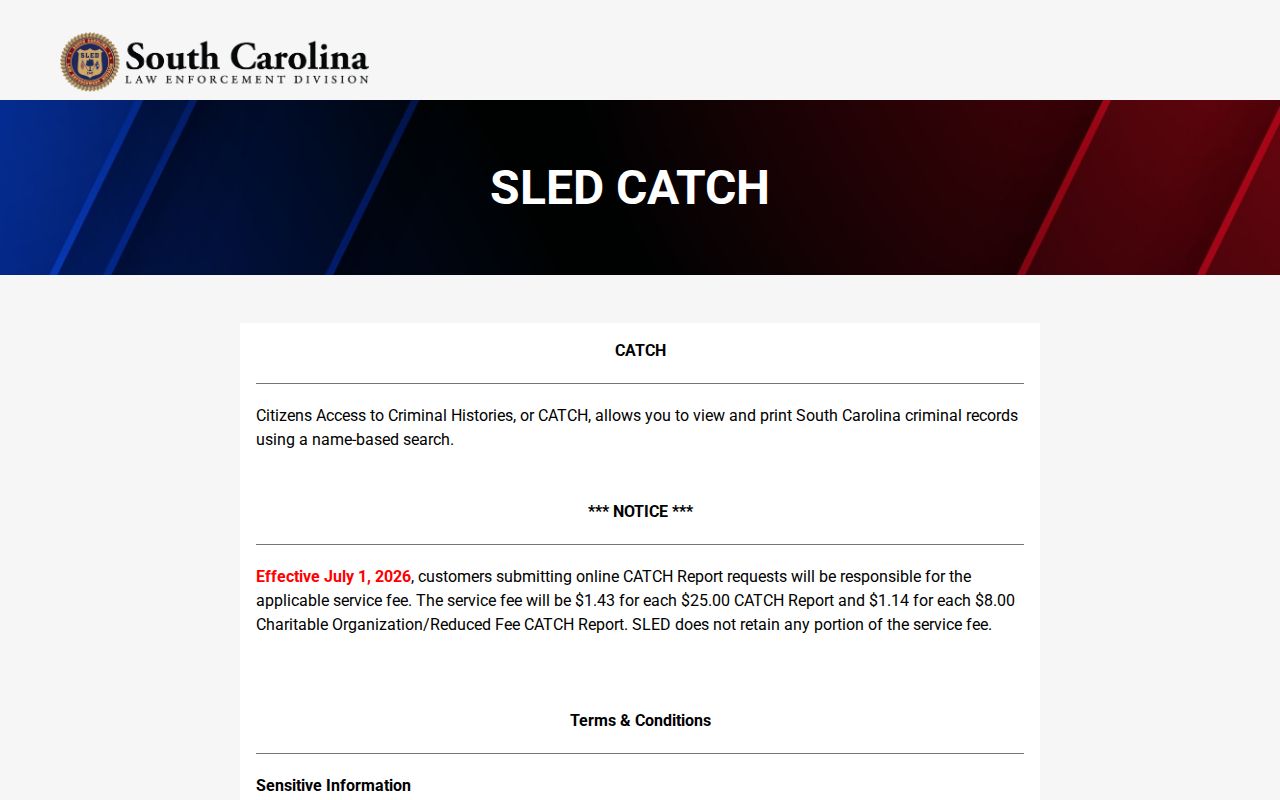
The image reinforces the key distinction: CATCH is a paid state repository view, not an Anderson County docket or live warrant check.
A mail request is also available through SLED Records Department, P.O. Box 21398, Columbia, SC 29221-1398. Include the form, payment, and a self-addressed stamped envelope, and ask for notarization or certification when needed. SLED's Public Dissemination Unit answers questions at 803-896-1443 on weekdays from 9 a.m. to 4:30 p.m. For your own national record, the FBI requires fingerprints and charges an $18 federal fee; a post office or approved channeler may add its own service fee.
Anderson County CATCH Record Limits
A CATCH return can differ from an Anderson County court file for sound reasons. The repository links fingerprint-supported arrest cycles with disposition and custody reports. A court page centers on one case number. The jail page centers on one booking event. A lag, unmatched identifier, missing fingerprint submission, or disposition not yet tied to the arrest cycle can leave the three views out of step.
The SLED CJIS description identifies the state unit that receives and updates criminal-history data.
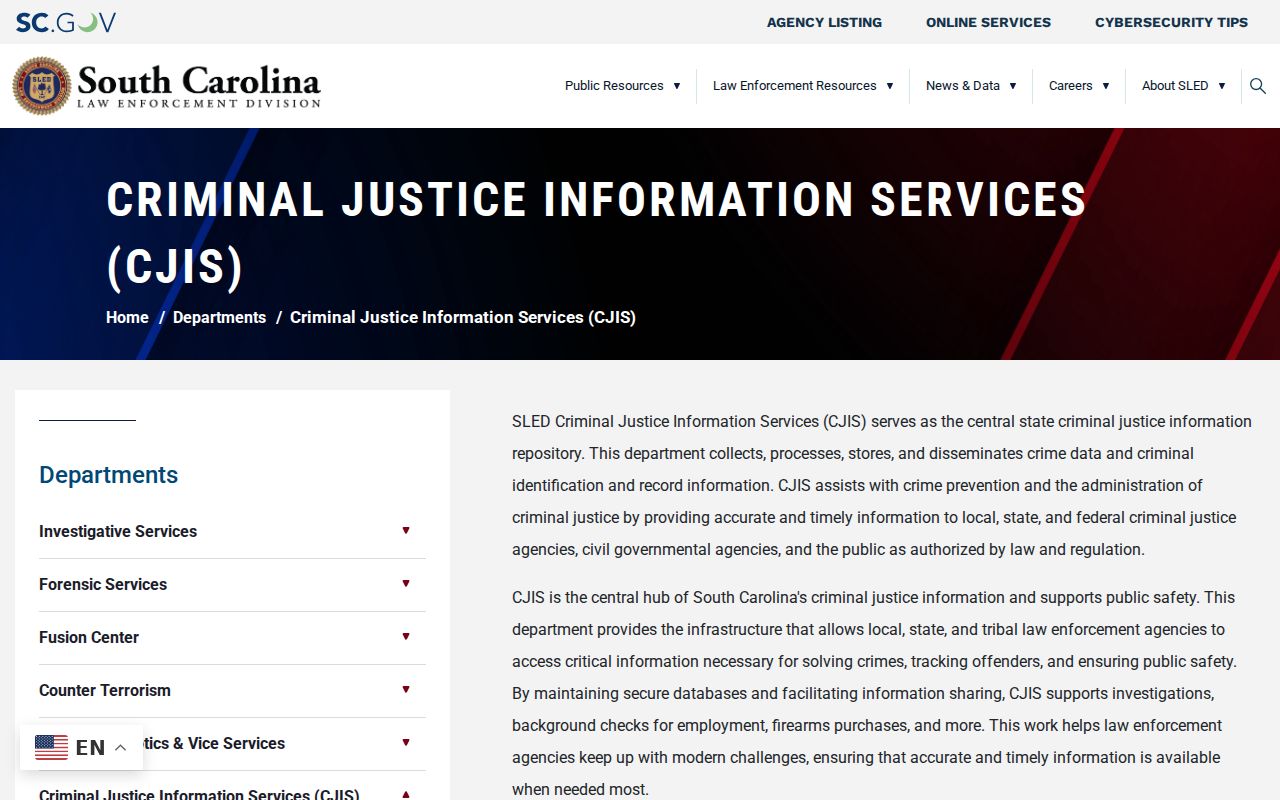
That repository role explains why a statewide result should be checked against the Anderson County source record when a charge or outcome looks wrong.
| Channel | Best use | Main limit |
|---|---|---|
| Public Index | Filed charge, docket, disposition, sentence | Not every city file or underlying document is online |
| ACSO or city agency | Incident, arrest, and booking facts | Initial allegations are not final outcomes |
| SLED CATCH | South Carolina repository self-review | Name match can be false and scope is not national |
Note: Since January 1, 2026, the Public Index no longer displays home addresses in new or existing case records.
Kinds of Criminal Records
Anderson County records should be read by purpose, creator, and date. An incident report describes the alleged event and probable cause. A booking file captures intake, initial charges, holds, bond, and release. The court file shows what prosecutors filed and how a judge or jury resolved each count. SLED then assembles fingerprint-supported arrest and disposition data at the state level.
- Incident and arrest report: request it from ACSO, a city police department, Highway Patrol, or the other agency that wrote it.
- Booking record: use Anderson County detention or the separate City of Anderson roster for present and recent custody.
- Court case file: use the Clerk of Court, the assigned magistrate, or the municipal clerk for charges, events, and outcomes.
- Warrant information: confirm through the issuing court and ACSO Warrant Division because the Most Wanted page is not a full database.
- Supervision or registry record: SCDPPPS handles probation and parole, while SLED and the sheriff administer registry duties.
The South Carolina Department of Corrections is a separate custody channel for state-sentenced people. Its Incarcerated Inmate Search is updated to the prior midnight.
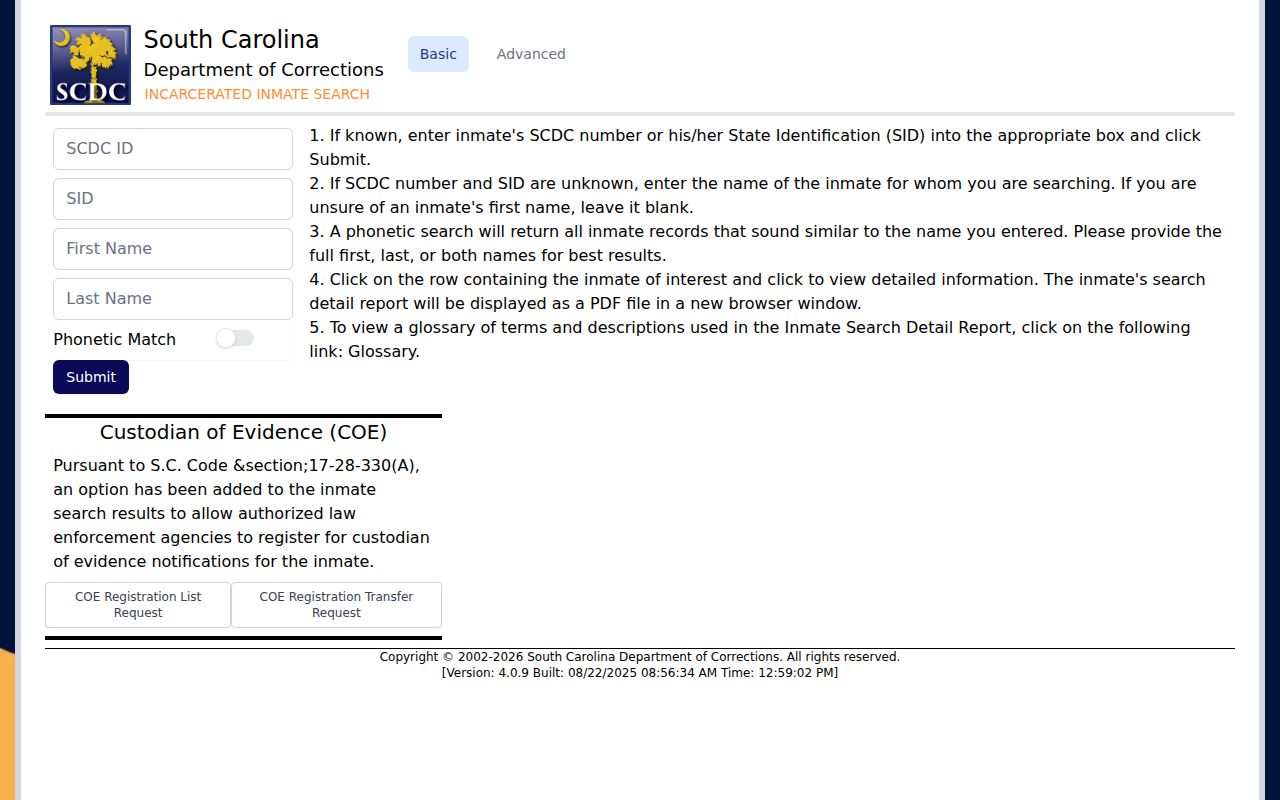
A missing SCDC result does not rule out county detention, release, probation, parole, juvenile custody, or City of Anderson detention.
Anderson County Warrant Record Chain
Anderson County does not publish a complete active-warrant database. The Zuercher vendor may support a warrants module elsewhere, but ACSO has not enabled it for public use here. The sheriff's Most Wanted page is selective. It cannot prove that no warrant exists. Call the Warrant Division at 864-260-4412, 864-260-4413, or 864-260-4414, then confirm a court-issued bench or arrest warrant with the issuing magistrate, municipal court, or Clerk of Court.
The ACSO online resources page points to the county tools that are actually available.
The official page is useful for routing, but it should never be expanded into a claim that Anderson County offers a full public warrant search.
A bench warrant often follows a missed appearance or court-order violation. An arrest warrant rests on a probable-cause finding, while a search warrant authorizes a search. Sealed, juvenile, unserved investigative, and other protected warrant material may remain outside public view. Do not act on a common-name match alone. Verify identity and seek legal advice about surrender or bond arrangements.
Anderson County Criminal Records: What They Contain
A complete Anderson County criminal record may connect identity data, an arrest cycle, a prosecutor's filed count, a court disposition, and a sentence or supervision event. Each screen presents only the fields its custodian needs. The word “charge” can therefore mean the arresting allegation on intake or the count later filed in court. Those values may lawfully differ.
| Name and identifiers | Names, aliases, agency or state IDs, and fingerprint links where the record permits public display. |
|---|---|
| Arrest and booking | Agency, incident or booking number, intake date, initial charge, holds, bond, and release events. |
| Charges and statutes | Offense description, code citation, count, and the difference between the arrest and filed charge. |
| Disposition | Pending, dismissal, nol pros, no-bill, acquittal, plea, verdict, or other recorded outcome. |
| Sentence | Custody, fine, restitution, probation, concurrent or consecutive terms, and later court action. |
| Custody or supervision | County detention, SCDC incarceration, probation, parole, release, transfer, or registry duty where applicable. |
- Nol pros
- The solicitor elects not to continue the charge at that time.
- No-bill
- The grand jury declines to approve an indictment.
- Disposition
- The final or current outcome assigned to a charge or case.
- Recognizance
- Release based on a promise and conditions rather than secured money.
Anderson County Inmate Record Transfers
County detention reports about 400 people in average daily custody and roughly 4,500 new arrests each year. The public Zuercher portal shows the preceding three months of current and recent detainee data. Searchable controls include name, sex, custody date, arrest date, and release date. Anderson County enables name, age, sex, arrest or release dates, and charge or hold rows in results. Race, cell block, and held-for agency fields from the vendor's generic design are disabled locally.
The South Carolina probation and parole agency supplies a separate view of state supervision.
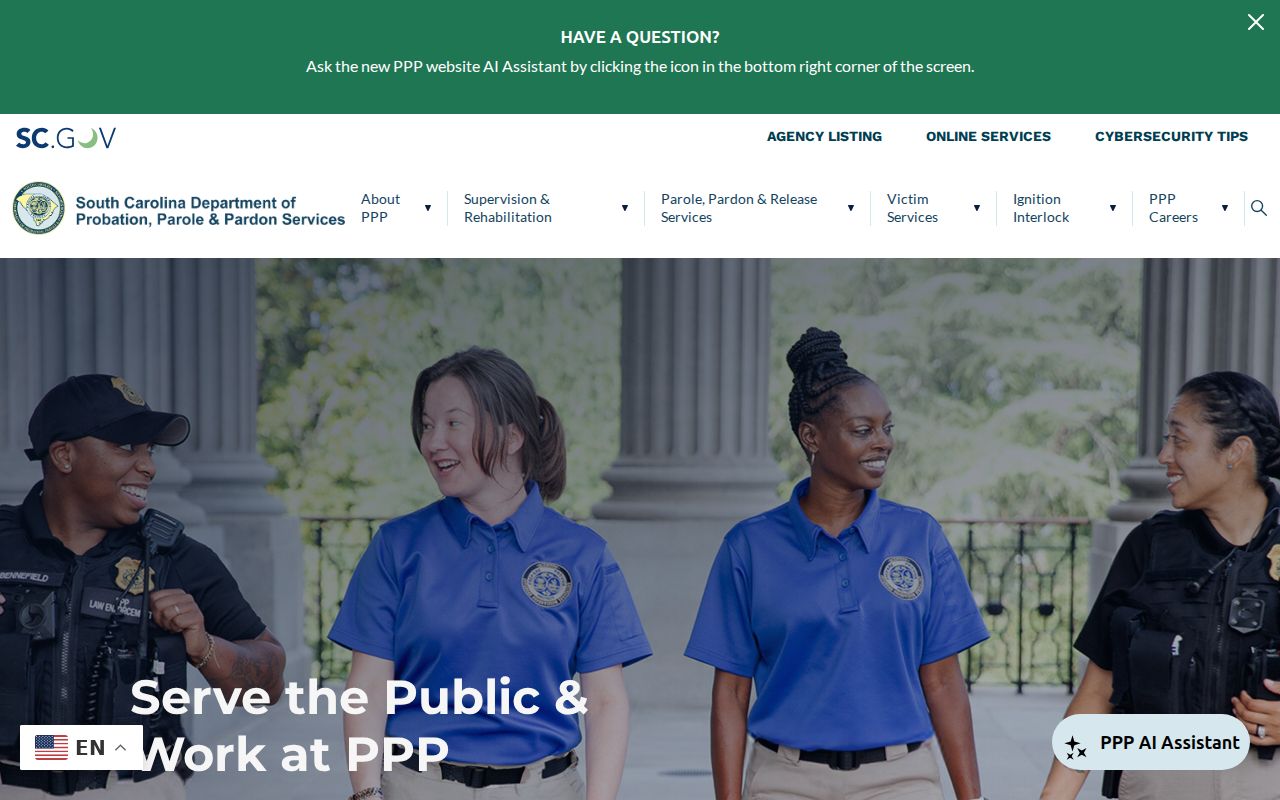
There is no verified public probationer name search, so use the Anderson County court sentence and call SCDPPPS only for information it may lawfully confirm.
A person transferred after a state sentence can disappear from the county roster and later appear in SCDC. Federal custody is different again. The Federal Bureau of Prisons locator covers its own population.
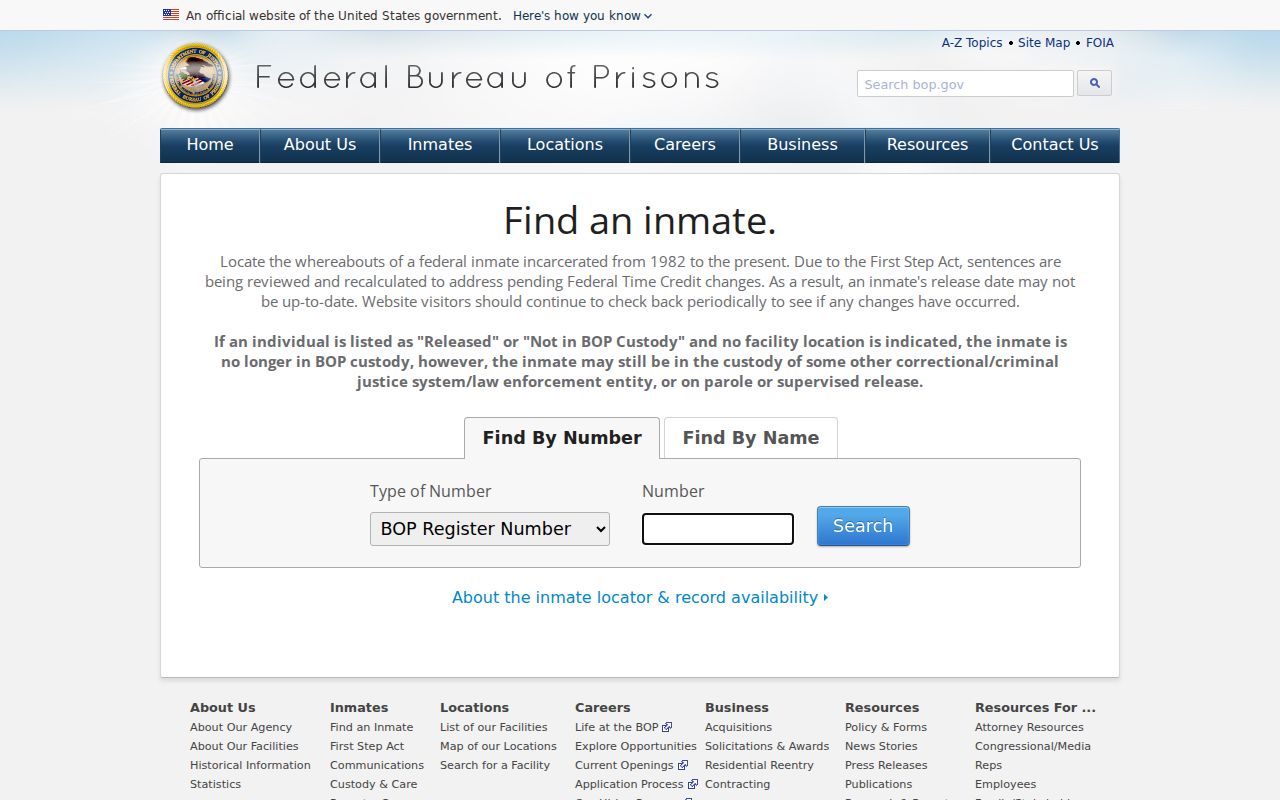
Search the system tied to the custody level; no single missing result clears every local, state, and federal possibility.
South Carolina Public Access Laws
The South Carolina Freedom of Information Act gives access to public records, but it also permits lawful redaction and withholding. Ask the office that created or keeps the record. Describe a date range, incident, court, or file number instead of asking an agency to create a new analysis. The custodian may remove protected victim, juvenile, identity, or active-investigation data and may charge actual search, redaction, and copy costs.
Key statutes:
S.C. Code §30-4-30 sets public inspection, copying, fee, and response rules.
S.C. Code §30-4-40 identifies law-enforcement, privacy, and other exemptions.
S.C. Code §23-3-115 supports SLED criminal-record searches and charges.
S.C. Code §23-3-120 requires fingerprint reporting for specified arrests.
S.C. Code §17-1-40 covers destruction after certain non-conviction outcomes.
Public does not mean unredacted. It also does not mean the record can be used for harassment, threats, vigilantism, unlawful discrimination, or commercial solicitation.
Anderson County Criminal Record FOIA
ACSO accepts a written request by email at foia@andersonsheriff.com or by mail to ATTN: Freedom of Information Act, 305 Camson Road, Anderson, SC 29625. Its form is optional. Identify the incident, date or range, location, involved agency, and desired format. For records up to 24 months old, the office states that its availability determination comes within ten business days. Older records have a twenty-business-day determination period. Production follows later, within the stated 30 or 35 calendar-day window when granted.
| ACSO item | Published amount |
|---|---|
| Black-and-white copy | $0.25 per page |
| Color copy | $0.35 per page |
| Ordinary staff time | $20 per hour |
| CD or DVD | $5 |
| USB drive up to 2 GB | $15 |
Postage is extra, and specialized labor can cost more. A nonrefundable deposit of 25 percent of the estimate may be required. Email delivery avoids per-page copying when the electronic record already exists, but retrieval and redaction work can still be charged.
Restricted, Sealed & Expunged Records
South Carolina expungement is tied to statutory eligibility. It is not a general deletion request. General Sessions applications usually begin with the Tenth Circuit Solicitor. A dismissed magistrate or municipal charge begins with that court. SLED cannot initiate relief and needs a judge-signed Order for Destruction of Arrest Records before it can remove the qualifying state entry.
Common routes include a dismissal, nol pros, no-bill, or not-guilty result under §17-1-40, plus defined first-offense and conditional-discharge provisions. Violent crimes and certain traffic convictions are excluded. Published conviction-route fees are normally separate payments of $250 to the solicitor, $25 for SLED verification when applicable, and $35 to the clerk. Eligible General Sessions non-convictions have no fee unless dismissal formed part of a plea agreement.
After a signed order reaches SLED, allow four weeks and buy a new CATCH report to verify the result. If the charge remains, SLED asks for a certified true copy of the order, a CATCH result bought within the prior 30 days, and a stamped return envelope. A pardon is different. It may restore legal consequences but leaves the conviction visible with a pardon notation.
Anderson County Federal Record Boundaries
Federal cases do not appear in the Anderson County Public Index. Anderson County lies in the U.S. District Court for the District of South Carolina, and PACER is the federal docket channel. PACER search and document use is generally billed at $0.10 per page, with defined caps and quarterly-fee waivers. Sealed records remain unavailable, and older criminal documents can have remote-access limits.
The official PACER service supplies federal case access.
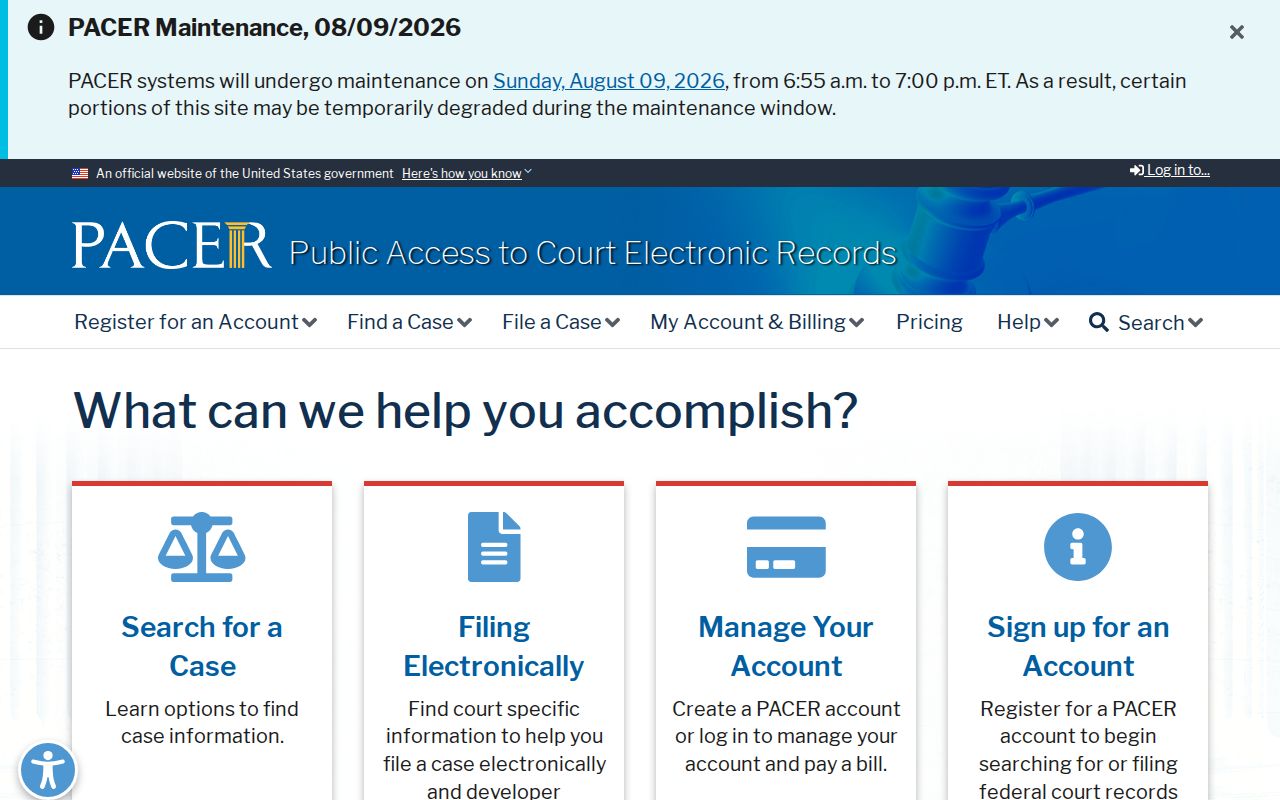
PACER complements rather than replaces Anderson County criminal court records because the systems cover different courts.
The FBI's subject-only fingerprint route is separate as well. The Electronic Departmental Order portal accepts requests for a person's own national Identity History Summary.
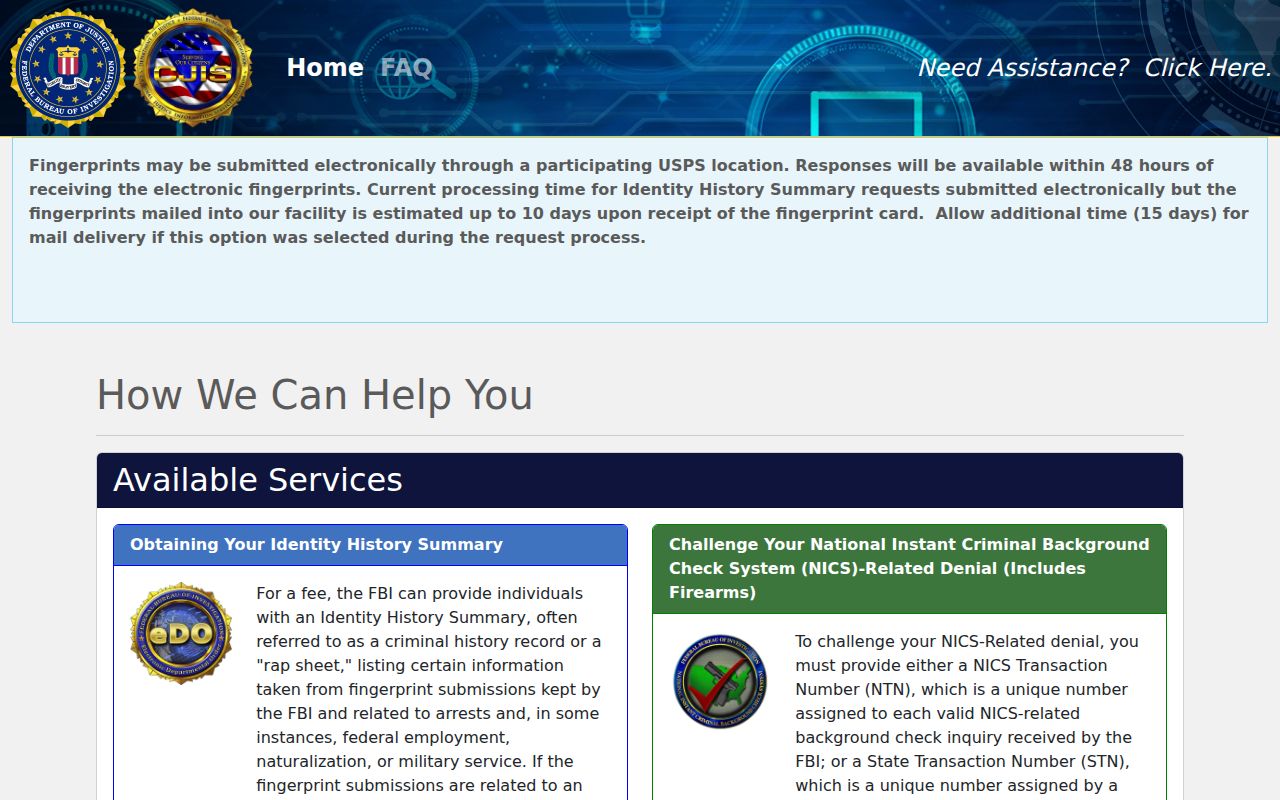
Fingerprints give a stronger identity match than a public name search, but the FBI process is not an open lookup of someone else's history.
City-by-City Criminal Records in Anderson County
Anderson County includes several police departments, and there is no countywide pool for every incident report. Anderson Police keeps city reports and a separate detention roster. Belton Police is the starting point for its incident file, while county detention and Belton Summary Court provide later records. Williamston Police and the municipal clerk supply the town-level route where no separate online roster or case portal was verified.
Anderson Record Check
Population estimate 31,323. APD records, city detention, and Municipal Court use local channels.
Belton Record Check
Population estimate 4,631. Belton Summary Court is a county magistrate court inside City Hall.
Williamston Record Check
Population estimate 4,338. Police and Municipal Court questions use direct town contacts.
Anderson County Courthouse Record Distinction
The historic courthouse at 101 South Main Street sits across from the operational court building. The verified General Sessions records counter is at 100 South Main Street. That one-number difference matters when a reader needs the clerk rather than a landmark. The Judicial Branch also lists Anderson as part of the Tenth Circuit.
The official Anderson courthouse listing identifies the active court contacts.
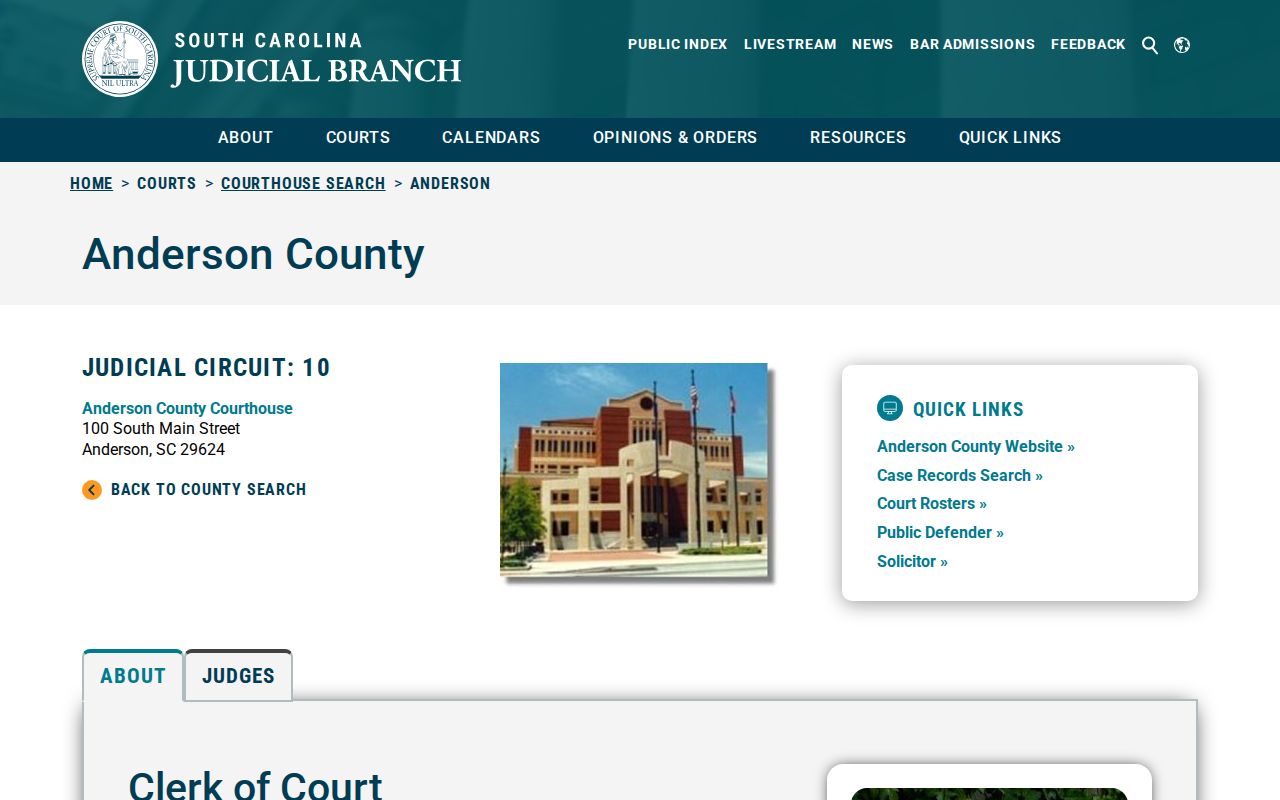
Use the listing and case caption together, since a summary or municipal matter may belong at a different Anderson County court.
Summary Court budget figures also show why an online status is not a delivery promise. County materials report 8,550 bench trials and 836 jury trials for FY2022-23, with larger FY2025 workload goals. Targets of 60 days for nonjury criminal dispositions and 120 days for jury-demand matters apply absent good cause. They are performance goals, not guaranteed schedules for one case.