
Anderson County Sex Offender Checks
The South Carolina Sex Offender Registry is the main public search for Anderson County. SLED manages the statewide system, and the Anderson County Sheriff performs the local registration and verification work. The registry is free. It stands apart from SLED CATCH, which is a paid name-based criminal-history product and expressly does not include sex offender registry results. A sound Anderson County lookup therefore begins with the registry itself, not with CATCH, a court docket, or a jail list.
Prepare a name variant or an Anderson County place before searching. Name searches help when the person is known. County, city, ZIP, address, radius, map, and list controls can support community safety checks when the live interface offers them. Search options may change, so confirm the choices shown on the active screen. An empty result does not amount to a broad criminal-history clearance. It only means the search did not return a public registry match under the terms entered.
Anderson Registry Starts at Sheriff
South Carolina law places the local registration step with county sheriffs. A person subject to registration must provide the information SLED requires to the sheriff in each county tied to residence and other covered connections. The sheriff keeps a copy, forwards the required data to SLED, and notifies local law enforcement as the statute directs. In Anderson County, that makes the Sheriff's Office the proper local point for a registration problem or a suspected failure to update.
Ordinary registrants report twice each year, during the birth month and again six months later. A person classified as Tier III under the cited federal framework registers every 90 days, as does a person found to be a sexually violent predator under the state provision. Address and other covered changes have short reporting windows. These are duties imposed on the registrant, not schedules the public should try to enforce. Send a concern to Anderson County law enforcement and let officers verify compliance.
South Carolina Sex Offender Registry Searches
Open the official search, read its conditions, and use the narrowest sound details. A broad Anderson County map can show nearby listed locations, while a name query is better for one known person. Check the full profile before drawing a conclusion from the result list. Common names, aliases, and old assumptions about an address can lead to the wrong match.
- Open SLED's public registry and accept the displayed use conditions.
- Enter a name, or choose Anderson County and a location control that fits the question.
- Review the returned list or map and compare more than the name alone.
- Open the profile, read the offense and status fields, then record the official contact route for any concern.
| Field or control | Type | Required | How to use it |
|---|---|---|---|
| Name | Text | No | Try known name forms and aliases. |
| County | Dropdown | No | Select Anderson for county scope. |
| City, ZIP, or address | Text | No | Use for a place-based check. |
| Radius | Dropdown | Conditional | Works with address or proximity search when offered. |
| Map or list | View control | No | Changes how results are presented. |
| Search or reset | Button | Not applicable | Runs the query or clears the fields. |
The official South Carolina search screen shows the working registry interface.
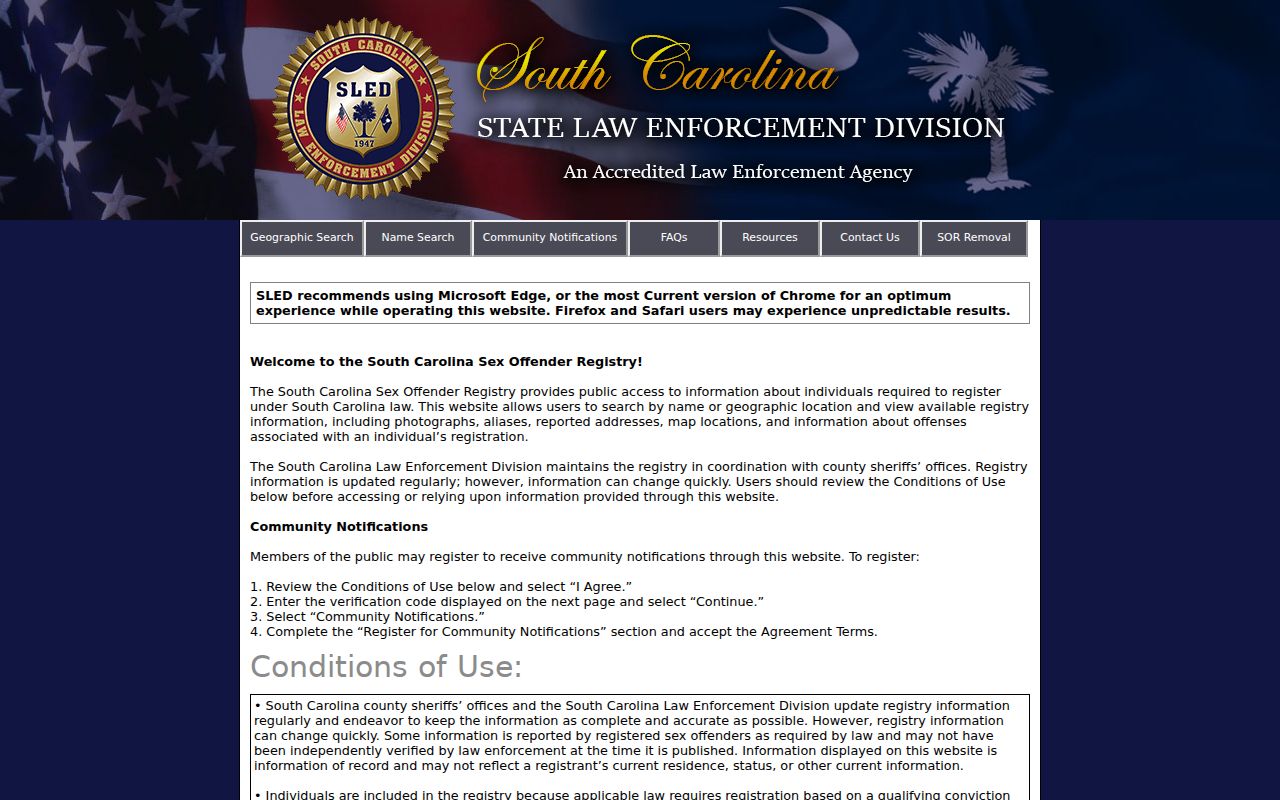
The captured form illustrates why both identity and location fields matter in an Anderson County registry search.
Anderson Registry Versus NSOPW
The South Carolina registry is the best first stop for an Anderson County address because SLED receives the local data. The National Sex Offender Public Website, operated by the U.S. Department of Justice, adds a cross-state layer across participating jurisdictions. NSOPW is useful when a person may have moved, when family safety planning spans state lines, or when an Anderson County location search needs a wider check.
Neither system should be treated as a guarantee that no risk exists. Public display depends on the governing law, the data supplied, and the search terms used. Run both when the question crosses a state line, but return to the source jurisdiction for the current profile. The national search portal is the source for the wider view.
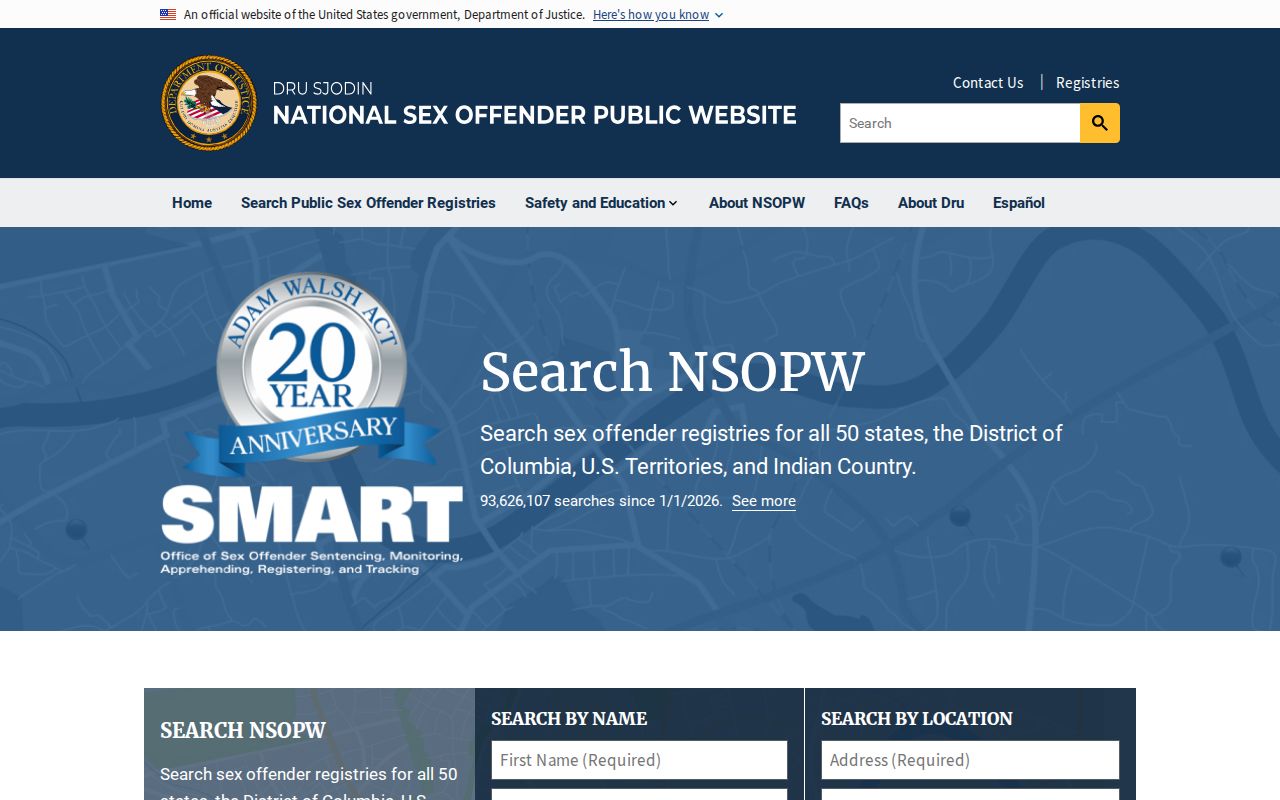
This national layer complements, but does not replace, the Anderson County records supplied through South Carolina's registry.
Registry Profiles: What They Show
A public profile joins identity, physical-description, location, offense, and registration fields. The exact visible set can vary. Read the whole entry and pay close attention to the conviction jurisdiction and status. A photograph may help with identity, but it does not establish current conduct. Likewise, a registered location describes the public location data permitted by law; it is not a reason to visit or confront the person.
| Name and Aliases | Primary name and any public alternate names used to check identity. |
|---|---|
| Photo and Description | Photograph, sex, race, and physical traits where displayed. |
| Registered Location | Residence or location detail at the public level allowed by law. |
| Qualifying Offense | Offense description, statute, conviction date, and jurisdiction where available. |
| Identifying Features | Scars, marks, tattoos, or vehicles when the profile makes them public. |
| Registration Status | Current status and other registration facts shown by the active system. |
Registry placement reflects a qualifying conviction or adjudication under the governing rules. It is not a fresh clinical assessment, and it says nothing by itself about new criminal conduct. For broader court outcomes, use the Anderson County Court Case Lookup as a separate record channel.
Anderson Registry Address Concerns
If an Anderson County address looks old, first check whether the profile has a status or date that explains it. Confirm that the place was entered correctly and that the result is the intended person. Do not visit the address. Registry data can lag behind a report, and an apparent mismatch needs official review rather than a public accusation.
Report a suspected compliance issue to the Anderson County Sheriff's Office or SLED. Give the profile reference, the field that appears wrong, and a clear reason for the concern. Call 911 only for an emergency. The same rule applies to suspected noncompliance: report it, preserve the public source, and do not confront the person. Law enforcement can compare the public display with the protected registration file and determine whether action is needed.
Note: A public address mismatch is a reason to contact law enforcement, not proof that a registry offense has occurred.
Registration Levels and Duties in South Carolina
South Carolina historically imposed lifetime registration, subject now to statutory relief routes. The state does use Tier I, II, and III for removal timing, but it is wrong to paste the generic federal formula of ten years, twenty-five years, and life onto public profiles. Under the current South Carolina Code, sections 23-3-462 and 23-3-463, the tier affects when and how a person may ask for termination. Time alone does not erase a listing.
| South Carolina category | Earliest route described by current law | Public effect |
|---|---|---|
| Tier I | May request SLED termination after the applicable 15-year clock and required conditions. | Listing remains until SLED grants relief. |
| Tier II | May request SLED termination after the applicable 25-year clock and required conditions. | Listing remains until SLED grants relief. |
| Tier III adult | No direct SLED termination request under section 23-3-462; a General Sessions motion may be filed after the applicable 30-year clock. | A court order is required for removal through that route. |
| Multiple tier offenses | The highest applicable tier controls when a petition may be made. | No automatic removal follows the passage of time. |
Eligibility also turns on treatment completion, later offenses, failure-to-register history, documentation, fingerprint-based checks, and other statutory conditions. Removal ends the registration duty if granted. It does not itself expunge the conviction that caused registration.
Anderson Registry Removal Is Not Automatic
South Carolina's removal path is an application or court process, not an expiration date. A Tier I or Tier II applicant starts with SLED under section 23-3-462. The request needs the official support required by the agency, including state and federal fingerprint checks. SLED reviews compliance and may deny the request if the statutory terms are not met or an objection is filed. A denied Tier I or Tier II request can move to General Sessions under section 23-3-463.
Tier III is different. An adult Tier III registrant cannot use the direct SLED termination path in section 23-3-462, but section 23-3-463 permits a court motion after 30 years from the stated discharge or end-of-supervision point. The court applies the statute's risk and justice findings. A denied motion generally cannot be filed again for five years. These rules affect removal from the registry, not the separate criminal case file.
Using Registry Information Lawfully
Public registry data supports awareness and safety planning. It can help a family learn which public listings are tied to an Anderson County area, identify the law-enforcement contact for a concern, and compare South Carolina results with the national layer. It does not authorize threats, harassment, intimidation, vigilantism, or unlawful discrimination. Treat a profile as an official record with a defined purpose, not as a call to take action against a person or household.
Misuse is a crime: Under S.C. Code §23-3-510, committing a crime with registry information can add up to $1,000 and six months for a misdemeanor, or up to five years to a felony maximum.
Use the portal's notification feature only as the live system describes it. A system update may require a fresh signup, so do not assume an old alert remains active. When a result causes concern, save the official profile link and contact law enforcement. That keeps verification with the offices responsible for Anderson County registration and public display.
Anderson Registry Law Changed in 2025
South Carolina Acts 57 and 58 took effect on May 22, 2025, and revised the termination framework in section 23-3-462. Older summaries may now be stale. The amended law sets 15 years for a Tier I SLED request and 25 years for a Tier II request, measured through the applicable registration, discharge, or supervision provision. It bars an adult Tier III direct request under that section while leaving the distinct court-motion route in section 23-3-463.
The legislature's published Title 23 chapter is the right place to confirm the live wording. The official registry statute source also explains local sheriff registration, reporting deadlines, and misuse penalties.
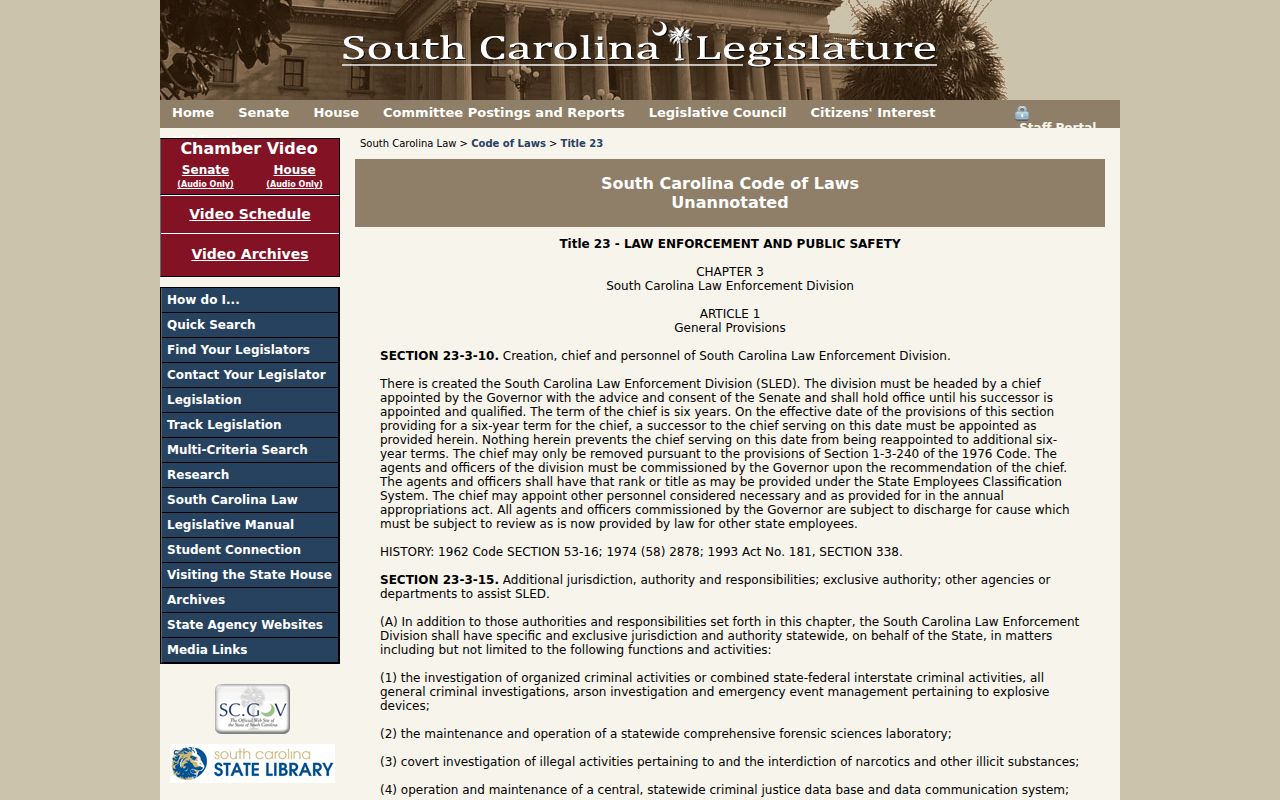
The statute view connects Anderson County searches to the current state duties and removal routes rather than an outdated national shorthand.